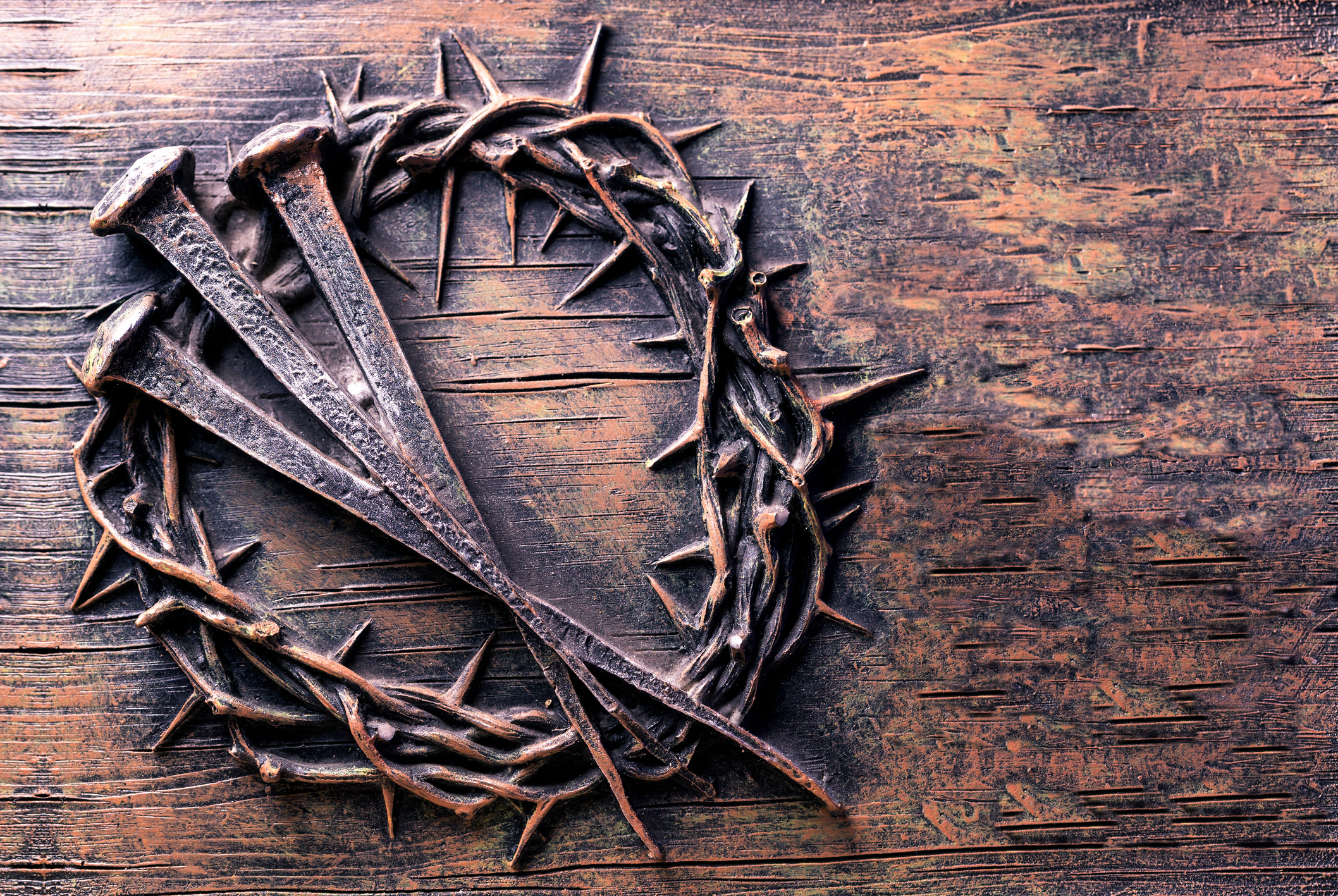
 The nails didn’t kill Jesus. Let me explain.
It typically took victims of crucifixion anywhere from one to four days to die—even up to a week. But Jesus expired after just six hours—most unusual.
To compare, the two crucified thieves were not even close to death after just six hours. For their deaths to be expedited in honor of the Sabbath, the soldiers had to break their legs.
The centurion in charge of Jesus’ crucifixion was surprised at His early expiration. He listened to all seven of Jesus’ sayings on the cross, but His final saying especially caught him. He heard Jesus announce His own expiration! Jesus said, “Father, into Your hands I commit My spirit” (Luke 23:46), and then He breathed His last. The centurion was a professional who had presided over many crucifixions, but a victim announcing his own expiration? Unprecedented. When he saw the manner in which Jesus breathed his last, the centurion exclaimed, “Certainly this was a righteous Man!” (Luke 23:47). “Truly this Man was the Son of God!” (Mark 15:39).
Furthermore, Pilate was also surprised at Jesus’ early expiration. When Joseph of Arimathea told Pilate that Jesus had died, Pilate was incredulous. It was too early. He consulted immediately with the centurion and was surprised to learn that Jesus had, in fact, died after just six hours. That was an uncommonly brief time for someone of Jesus’ age and health.
Why did Jesus die after only six hours on the cross? Because He didn’t die of crucifixion.
Jesus told His disciples that the Father had given Him the power to lay His life down, and also the power to take it again (see John 10:18). He had the power to expire whenever He chose.
Jesus didn’t die of crucifixion; rather, He died of His own volition.
Jesus had the power, after hanging on the cross for an hour, to call it quits and expire. But He continued to hang there because He was resolved to complete the task the Father had given Him. His task was to pay the full purchase price for our redemption.
Jesus was not kept on the cross by the nails; He was kept on the cross by His own voluntary resolve. He was determined to stay on the cross until the work was accomplished.
When Jesus labored on the cross, what was the value of His hourly wage? Was His work worth $1 million an hour? $1 billion an hour? Much more than that, His work was priceless.
On the cross, Jesus absorbed the Father’s wrath against sin. The Father’s hand on Him was the greatest weight of His sufferings. Jesus was enduring the punishment for our peace (Isa 53:5). But after six hours, the Father’s hand lifted, and a huge sense of reprieve swept over Jesus’ soul. The work was done! The Father was satisfied! “It is finished!” (John 19:30).
When the work was finished, Jesus expired.
What’s our takeaway from Jesus’ example? Finish the thing. When you’re laboring in the Spirit for something, work the thing until it’s finished.
Jesus was laboring to buy the authority to break the seals and open the scroll of the Father’s destiny for His life (Rev 5). If you’re in a trial, maybe you’re also laboring for something. Perhaps you’re laboring, just like Jesus, to buy the authority to open the scroll of the Father’s story for your life.
Are you in a fiery trial? Don’t lose heart. Don’t quit. Don’t tap out. Don’t grow sluggish. Work! Why would you want release from your cross before the work was finished? Labor in the Spirit, endure to the end, buy the authority, and work the thing until it’s finished.
“But let patience have its perfect work, that you may be perfect and complete, lacking nothing” (James 1:4).
Finish the thing.