Finish the Thing

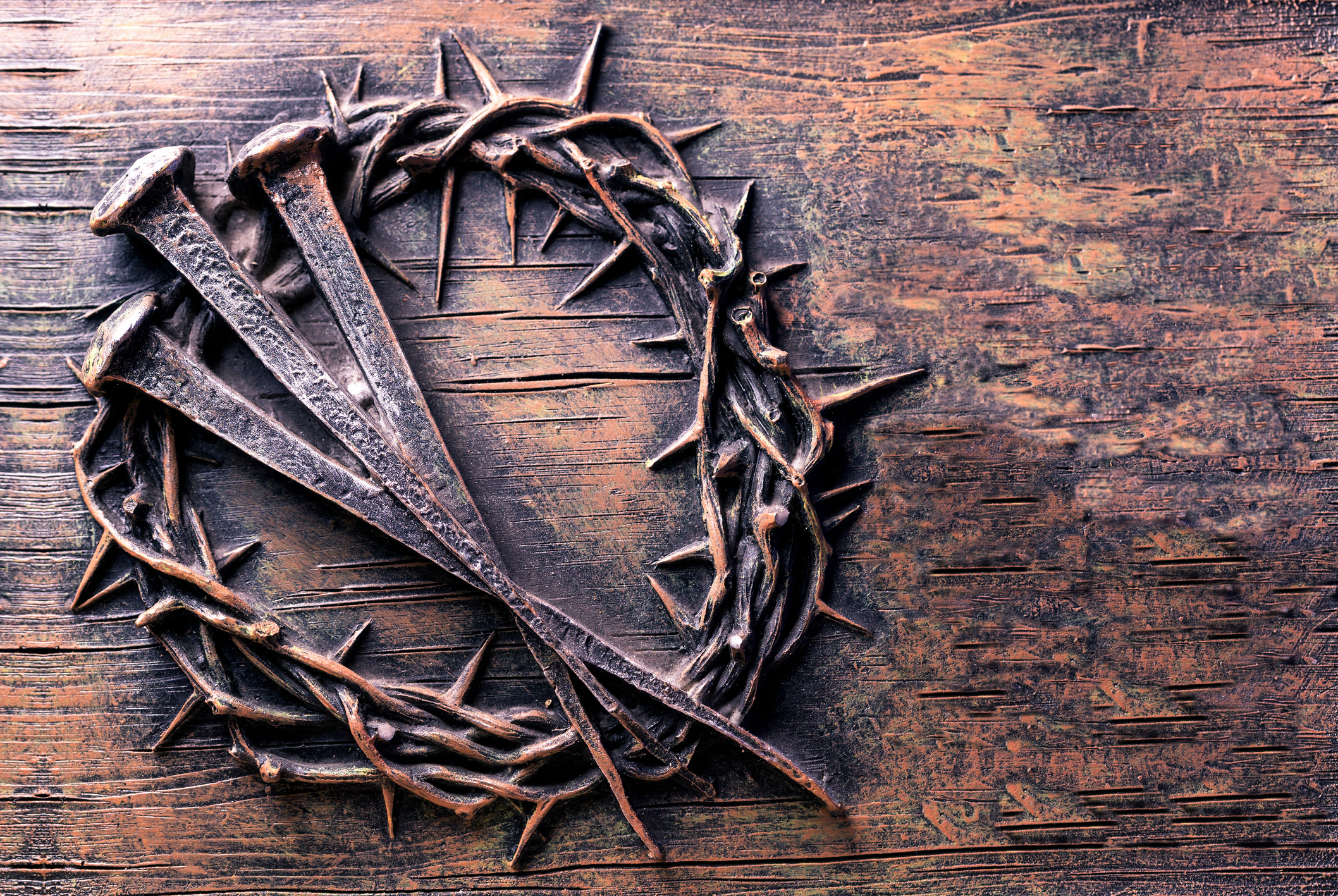
The nails didn’t kill Jesus. Let me explain.

It typically took victims of crucifixion anywhere from one to four days to die—even up to a week. But Jesus expired after just six hours—most unusual.

To compare, the two crucified thieves were not even close to death after just six hours. For their deaths to be expedited in honor of the Sabbath, the soldiers had to break their legs.

The centurion in charge of Jesus’ crucifixion was surprised at His early expiration. He listened to all seven of Jesus’ sayings on the cross, but His final saying especially caught him. He heard Jesus announce His own expiration! Jesus said, “Father, into Your hands I commit My spirit” (Luke 23:46), and then He breathed His last. The centurion was a professional who had presided over many crucifixions, but a victim announcing his own expiration? Unprecedented. When he saw the manner in which Jesus breathed his last, the centurion exclaimed, “Certainly this was a righteous Man!” (Luke 23:47). “Truly this Man was the Son of God!” (Mark 15:39).

Furthermore, Pilate was also surprised at Jesus’ early expiration. When Joseph of Arimathea told Pilate that Jesus had died, Pilate was incredulous. It was too early. He consulted immediately with the centurion and was surprised to learn that Jesus had, in fact, died after just six hours. That was an uncommonly brief time for someone of Jesus’ age and health.

Why did Jesus die after only six hours on the cross? Because He didn’t die of crucifixion.

Jesus told His disciples that the Father had given Him the power to lay His life down, and also the power to take it again (see John 10:18). He had the power to expire whenever He chose.

Jesus didn’t die of crucifixion; rather, He died of His own volition.

Jesus had the power, after hanging on the cross for an hour, to call it quits and expire. But He continued to hang there because He was resolved to complete the task the Father had given Him. His task was to pay the full purchase price for our redemption.

Jesus was not kept on the cross by the nails; He was kept on the cross by His own voluntary resolve. He was determined to stay on the cross until the work was accomplished.

When Jesus labored on the cross, what was the value of His hourly wage? Was His work worth $1 million an hour? $1 billion an hour? Much more than that, His work was priceless.

On the cross, Jesus absorbed the Father’s wrath against sin. The Father’s hand on Him was the greatest weight of His sufferings. Jesus was enduring the punishment for our peace (Isa 53:5). But after six hours, the Father’s hand lifted, and a huge sense of reprieve swept over Jesus’ soul. The work was done! The Father was satisfied! “It is finished!” (John 19:30).

When the work was finished, Jesus expired.

What’s our takeaway from Jesus’ example? Finish the thing. When you’re laboring in the Spirit for something, work the thing until it’s finished.

Jesus was laboring to buy the authority to break the seals and open the scroll of the Father’s destiny for His life (Rev 5). If you’re in a trial, maybe you’re also laboring for something. Perhaps you’re laboring, just like Jesus, to buy the authority to open the scroll of the Father’s story for your life.

Are you in a fiery trial? Don’t lose heart. Don’t quit. Don’t tap out. Don’t grow sluggish. Work! Why would you want release from your cross before the work was finished? Labor in the Spirit, endure to the end, buy the authority, and work the thing until it’s finished.

“But let patience have its perfect work, that you may be perfect and complete, lacking nothing” (James 1:4).

Finish the thing.

The Power of Perspective

My friend Juliet Canha says that perspective is everything, and I find support for that idea in a certain story in the Bible.

Moses sent twelve spies to search out the land of Canaan and then bring back a report on what they observed. He hoped that their report would help prepare the people of Israel to conquer their promised land.

Two of the spies—Joshua and Caleb—were men of faith, and they saw the promised land through eyes of faith.

The other ten spies, however, viewed what they saw through eyes of unbelief. Consequently, “they gave the children of Israel a bad report of the land which they had spied out, saying, ‘The land through which we have gone as spies is a land that devours its inhabitants’” (Num 13:32).

Why did they describe the land of Canaan as “a land that devours its inhabitants”? Because they had witnessed an uncommon number of funerals among the Canaanites. And the people they were burying were young people in their years of strength. Why were so many vibrant people suffering premature deaths in Canaan? Looking from a perspective of unbelief, the ten spies concluded, “This is a hostile country. It’s deadly to its inhabitants. It’s a land that devours its inhabitants, and if we move into this country, it will devour us, too.”

They saw the whole thing as a setup for catastrophe. God had bought them to Canaan—so they thought—to destroy them.

Caleb and Joshua, however, had a different perspective. They were looking at the exact same thing—funerals everywhere—but viewed them through eyes of faith.

Caleb and Joshua saw God fighting for Israel. They saw that the Canaanites’ protection had departed from them, and God was already thinning their military ranks (Num 14:9).

They remembered God’s promises, “I will cut them off…I will make all your enemies turn their backs to you” (Ex 23:23, 27). God was doing it! He was fighting for them. He was weakening the Canaanites so Israel could take its promised land.

All twelve spies were looking at the same thing, but their conclusions were vastly divergent.

Unbelief said, “God is against us.” Faith said, “God is for us.”
Unbelief said, “This is horrible!” Faith said, “This is awesome!”
Unbelief said, “We’re trapped!” Faith said, “We’re set up for victory.”
Unbelief said, “God is going to destroy us.” Faith said, “God is giving us our inheritance.”

Yes, sometimes perspective changes everything. Seek the Lord for His perspective on your situation. When you see what He sees, your heart will soar with confidence in the good thing He is doing in your life.

God is for you!

Secrets of a Fruitful heart

The parable of the sower is Jesus’ most commanding parable. It towers above all the parables because it reveals, in a visually graphic way, how to be a disciple of Jesus.

Three images in the parable are striking. First, you see a footpath beside a farmer’s field that’s trampled hard by foot traffic. When the seed of the word falls on the trampled path, the seed bounces on the surface and is devoured by birds. This image represents trampled places in our hearts that are unresponsive to the word of God.

Second, you see stones in the soil. Stones hinder roots from going deep and accessing subterranean moisture. When the sun arises, the plant is scorched. The stones represent pockets of sin in our lives. Stones of compromise will invariably keep us from hundredfold fruitfulness.

Third, you see weeds in the farmer’s field. Weeds grow faster and thicker than wheat, and if allowed to remain in the field, they will choke the wheat so that the harvest is diminished or ruined. Jesus said the weeds represent tough cares of life, easy pleasures of life, and money—the engine that drives it all. Weeds are temporary concerns that require much attention and produce no eternal fruit.

Disciples of Jesus are devoted to the three things this parable illustrates. First, they break up all the hard places of their heart that have been trampled through the course of life, so that every seed of God’s word can penetrate their heart and bear fruit.

Second, they dig up and remove every stone of compromise when the Holy Spirit shows it to them, so that their roots penetrate deeply into the word of Christ and enable them to bear much fruit.

Third, they cut back every weed that tries to choke and distract them from the things of the kingdom that are truly fruitful.

In summary, therefore, we break up our fallow ground, remove all stones of sin, and cut back the competing cares and pleasures that want to choke our hearts like weeds. With these three simple but profound ways, Jesus gave us kingdom secrets for hundredfold fruitfulness.

Explore these three secrets in my 2024 title, Secrets of a Fruitful Heart. It’s an essential message for now. Do discipleship Jesus’ way. Check out the Book and accompanying Discipleship Manual here.

Sometimes We Need Trials

Trials Blog Image 5After His resurrection, Jesus appeared to His disciples on several occasions and left them with some final instructions before ascending to His Father in heaven. His directives were mostly forward-looking and vision-casting regarding the Great Commission that lay before them. But the cross was such a huge event that Jesus took time in His visits with the disciples to look back and debrief with them about it.

Here’s what He said to them about His cross:

Thus it is written, and thus it was necessary for the Christ to suffer and to rise from the dead the third day (Luke 24:46).

His message was very clear—His sufferings were necessary.

Consider for a moment what He didn’t say about the cross. He didn’t say, “That was the greatest injustice of human history—it should have never happened!” True, it was the greatest injustice of human history, but yet it had to happen.

Jesus didn’t say, “Pilate really blew that one! His wife warned him, but the man wouldn’t listen. And the chief priests? They’re going to regret that one big time! Just wait till Judgment Day and see how they fare.” He didn’t talk about the way the leaders sinned against Him.

Jesus didn’t say, “The devil really came after Me. He raged against Me and tried to take Me out. And just when his attack was the most fierce, all you guys abandoned Me. Where were you at crunch time? You said you were willing to die with Me, but then, when I needed you most, you disappeared.” No, Jesus didn’t talk about Satan’s agenda at the cross—even though Satan clearly had one. Nor did He speak of His disciples’ failures.

Here’s what Jesus was saying:

“I had to do the cross—to fulfill Scripture.”
“I had to do the cross—to complete all righteousness.”
“I had to do the cross—to destroy the devil.”
“I had to do the cross—to overcome sin, hell, and the grave.”
“I had to do the cross—to purchase your redemption.”
“I had to do the cross—to heal your infirmities.”
“I had to do the cross—to become a faithful High Priest.”
“I had to do the cross—to earn My stripes as the Captain of your salvation.”
In light of God’s eternal plan to redeem humanity, Jesus was saying that the cross was necessary.

Peter Used the Same Word

When Peter wrote about fiery trials in his first epistle, he also used the same Greek word for necessary.

In this you greatly rejoice, though now for a little while, if need be, you have been grieved by various trials, that the genuineness of your faith, being much more precious than gold that perishes, though it is tested by fire, may be found to praise, honor, and glory at the revelation of Jesus Christ (1 Pet 1:6-7).

A literal rendering of the phrase, if need be would read if being necessary. Peter was literally saying, “Sometimes our fiery trials are necessary.”

By using the same word Jesus used to describe His sufferings, Peter was drawing a straight line between the cross and our fiery trials. He was indicating that our sufferings in our fiery trials are directly connected to Jesus’ sufferings on the cross. Peter was inferring, just as it was necessary for Jesus to suffer on the cross, sometimes it’s also necessary for us to suffer fiery trials.

Just as the cross was a fiery trial that tested Jesus’ faith, your point of suffering is a fiery trial that is testing your faith.

Some people will likely look at your difficulty and say to you, “This isn’t right. This should have never happened to you.” But from God’s perspective, it’s the trial that’s making you who you are. It’s producing in you more fruit to God than ever. It’s revealing God’s redemption in your family. It’s giving God room to write a great story with your life.

Your trial is your certification (1 Pet 1:6-7). The way you walk through it demonstrates to heaven and earth that your faith is authentic.

Peter said the faith we obtain in fiery trials is much more precious than gold that perishes (1 Pet 1:7). It’s incorruptible (1 Pet 1:4). How can we gain a faith that’s so much more valuable and priceless than gold? There’s really only one way—through fiery trials.

To gain faith this precious, sometimes we need trials in our lives.

This post is adapted from chapter two in Bob’s book, SOMETIMES WE NEED TRIALS. For more information on that book, go here.

Hidden in the Quiver

pexels-rodnae-productions-6669103Isaiah 49 is one of my all-time favorite chapters in the whole Bible! In that chapter, Isaiah described Jesus as a polished arrow: “And He has made My mouth like a sharp sword; in the shadow of His hand He has hidden Me, and made Me a polished shaft; in His quiver He has hidden Me” (Isa 49:2).

Speaking through Isaiah, Jesus spoke of Himself as an arrow that was polished and then, once fully prepared for deployment, hidden in the Father’s quiver. He was speaking specifically about His first thirty years on earth. He was polished and prepared years earlier, but was hidden in the Father’s quiver until He turned thirty—the right time for His deployment.

Based on Jesus’s example, here’s the principle to glean: God will polish and prepare you for your assignment and then, once fully ready, sometimes He’ll put you back in His quiver and keep you in a quiet place of readiness until the time comes for your release and deployment.

You’re an arrow in the hand of God, and He polishes you for a couple reasons. First, He wants you to fly straight and hit the mark with full impact. Second, He doesn’t want to be stung by your deployment. Let me explain that second point.

In Ezekiel 21:11, a military weapon was polished “that it may be handled.” For example, if an arrow is deployed with rough or jagged areas on its surface, it can cut or wound the archer’s hand as it passes between his fingers. The archer will remove imperfections from the arrow’s surface by polishing, therefore, so that he’s not hurt as the arrow is released.

It’s possible for an arrow to hit its mark but, in the process, leave the archer smarting.

I don’t want to be an arrow that hits the mark but leaves God regretting that He deployed me. I want Him to polish me so He can enjoy me throughout the entire battle.

There are several people in Scripture whose stories illustrate Isaiah 49:2, that is, they were polished and prepared and then hidden away in God’s quiver. In some cases, they were used for only one significant deployment.

For an example, look at Ananias of Damascus. The book of Acts records only one deployment of Ananias—when he prayed for Saul of Tarsus—but that deployment was so significant it was included in Scripture.

Saul—who was later named Paul—traveled to many cities to arrest believers. Why was he apprehended by Jesus as he approached Damascus? Why Damascus? Answer: Because Jesus had a polished arrow in Damascus.

Ananias was polished, ready, and hidden in God’s quiver in Damascus. When Saul came to town, God was able to reach in, take hold of Ananias, and release him to minister to Saul. A lifetime of polishing had prepared him for one remarkable, unforgettable deployment.

Has God polished you? But now that you’re ready to step into your assignment, do you feel hidden and tucked away? Remain faithful to your Lord because one day He may reach into His quiver, draw you out, and use you for historic change.

Are you willing for a life of polishing and hiddenness, if it’s all simply for one history-changing deployment?

Word For 2023: Be Brave!

vecteezy_2023-new-year-challenge-goal-and-target-achievement-and_11547629_649 (3)

The word the Lord has given me for 2023 is found in 1 Cor 16:13, “Be brave” (NKJV).

Other translations render it, “Be courageous.” “Quit yourselves like men.” “Show courage.” “Do manfully.” “Be men.” “Act like men.” “Acquit yourselves like men.”

In the Greek, it’s a single word, and could be literally rendered, “Act the man.” Or, as one  interlinear translates it, “Play the man.”

To say it in a contemporary idiom, we could say, “Man up.”

This call to courage from the apostle Paul mirrors the Lord’s call to Joshua, “Be strong and of good courage” (Joshua 1:6).

I sense the Lord saying to us, Move forward in 2023 with boldness and bravery.

This is not a year to shrink back, or be intimidated, or reserved, or self-preserving. Don’t simply play it safe. Rather, obey the call of the Lord with courage and strength.

There are lots of reasons in 2023 to be cautious, timid, reticent, tentative, apprehensive, afraid. Following Jesus is more unpopular today than I can remember in my lifetime. But all those reasons for caution are based in human evaluations of the terrain before us. None of those reasons to be nervous or hesitant proceed from the Holy Spirit.

Yes, we should be wise, discerning, fully alert, and self-controlled; but not timid and self-preserving.

I’ve learned something about courage from Ezra 3:3. At the time of that verse, the people of Israel faced fearful threats and danger from the people of the lands around them. But still, they bravely built an altar to God. Courage is not what you do in the absence of fear and danger, but what you do in the face of fear and danger.

Jesus demonstrated this kind of bravery when He stroke forward toward Calvary.

Do you face fearful threats, potential danger, or possible backlash in 2023? Man up. Be brave. Put on the full armor of God, take your stand, and step forward in obedience to the Holy Spirit.

God is with you in 2023. Be brave!

Bob presents the message of this post in a 3-minute video on YouTube. To watch it, go here

The Moon: Faithful Witness

When God placed the moon in our sky, He was sending a message. He was making a visual statement to everyone on our planet about His goodness and faithfulness.

Psalm 89:37 calls the moon “the faithful witness in the sky.” It witnesses to God’s faithfulness. Every twenty-eight days, the moon completes its cycle and shines brightly as a full moon. The moon has been faithfully illuminating the earth, through its cycles, from the beginning of time.

Every time you look at the moon, it’s saying to you, “God is faithful!” Just a glimpse of the moon should cause you to worship, because He’s as faithful as the moon.

There’s a story in the Bible in which the moon’s witness was especially meaningful.

The nation of Israel dwelled inside Egypt’s borders for 430 years. When Israel finally left Egypt, they were driven out so forcefully by Pharaoh that they had to leave in the middle of the night (see Exo 12:39-42). When Israel hit the road and headed for the wilderness, it was such a solemn night to the Lord that He called it, “that night of the LORD” (Exo 12:42).

It was the night of the Passover. And God mandated that they commemorate “that night of the LORD” annually, for all time.

That first Passover took place under a full moon, The Jews celebrate the Passover annually on the 14th day of the month—the night in its cycle when the moon is full.

Israel set out for the wilderness soon after midnight (Exo 12:29). Thankfully, they had a full moon overhead to brighten the path before them. But that full moon did more than just light their path; it testified to God’s faithfulness.

God had promised Abraham that He would bring His descendants out of Egypt after 400 very difficult years (Gen 15:13-14), and sure enough, that’s what He did. At their exodus, the moon itself was saying to the Israelites, “God is faithful! He promised to deliver you, and now He has.”

God had planned, far in advance, to deliver Israel from Egypt on a very specific date. Everything about the showdown with Pharaoh and the ten plagues was timed strategically so that it would lead ultimately to an exodus on the 14th of the month. Clearly, the fulfillment of God’s promises are planned in heaven with intentional precision.

God is faithful to His promises. If He has given you a promise, you can be assured of this: He will fulfill it! Every time you see the moon in the sky, your confidence in God will surge and you’ll probably bow in worship.

He’s faithful!

When All You Can See is a Tomb

pxfuel.com

On the night of His betrayal—just hours before He would be crucified—Jesus endeavored to prepare His disciples for His excruciating death. He knew what was coming but they didn’t. To help them process what they were about to witness, Jesus used a metaphor.

“A woman, when she is in labor, has sorrow because her hour has come; but as soon as she has given birth to the child, she no longer remembers the anguish, for joy that a human being has been born into the world” (John 16:21).

The disciples didn’t fully understand in that moment, but He was saying to them, “I’m pregnant.”

He was pregnant with Prophecy; He was pregnant with Purpose; He was pregnant with Possibility.

Things were about to get messy.

In essence, Jesus was alerting them, “I’m about to go into labor—into hard labor. You’re going to be distracted with the anguish, the sorrow, the travail, the birth pangs, the contractions, the pushing.”

At the cross, we’re looking at God in labor; at the resurrection, we see the baby being born. The resurrection was the birthing of our salvation.

Why was the labor so intense? Because it was a real big baby!

When the disciples looked at the cross, they saw everything shutting down; but when God looked at the cross, He saw everything opening up.

When the disciples looked at the cross, they saw the end of everything; when God looked at the cross, He saw a new beginning to everything.

When the disciples looked at the cross, all they could see was a massive setback; when God looked at the cross, He saw a massive setup.

When the disciples looked at the cross, they saw Jesus getting crushed in the heel; when God looked at the cross, He saw Satan getting crushed in the head (Gen 3:15).

When the disciples looked at the cross, all they could see was a tomb; when God looked at the cross, He saw a womb (John 16:21).

When we look at our fiery trials, sometimes all we can see is a tomb. “This thing is killing me!” But through the example of the cross we can see how God takes the very thing we thought was our end, and He makes it, by His redemptive grace, a portal to birth new possibilities in the kingdom of God for us, our family, and our generation.

This post is an excerpt from Chapter One in Bob’s new book, It’s Not a Tomb It’s a Womb. For book information click here.

Tempted With Anxiety?

anxiety-g4ecb81a64_1920We’re in a global pandemic of anxiety right now. Between coronavirus, the war in Ukraine, and the economy, the whole world is trembling. Millions are anxious about their health, or finances, or relationships, or job, or world peace.

What should Christians do when they realize they’re being tempted with anxiety? Here’s an answer to consider: View anxiety like a rock in the garden of your heart.

I have in mind Jesus’ parable of the sower (see Mark 4:1-20). He spoke of four different heart responses to the word of God. The second heart response in His parable was that of the stony heart (Mark 4:5-6). Stones in a garden inhibit the ability of roots to go deep. When roots remain shallow, the plant will spring up quickly but then be scorched easily when conditions are adversarial.

Here’s how Jesus described the stony heart:

These likewise are the ones sown on stony ground who, when they hear the word, immediately receive it with gladness; and they have no root in themselves, and so endure only for a time. Afterward, when tribulation or persecution arises for the word’s sake, immediately they stumble (Mark 4:16-17).

What are stones? Pockets of sin that hinder root development. All Christians have stones in their hearts, whether many or few, whether large or small.

Stones will surprise you. When gardeners turn over the soil of their gardens in the spring, they’ll sometimes hit into a stone they didn’t know was there. How did that stone suddenly get in their garden? Well, it was there all along, but it didn’t appear until a new season surfaced it. That’s because winter seasons cause stones to move toward the surface.

A change of seasons can cause stones to surface in your heart. For example, I can imagine a believer saying, “I have no fear! By the grace of God, I’ve gained the victory and don’t struggle with fear anymore. I am anxious about nothing!” And then along comes 2020 and coronavirus. Suddenly, that believer is shaken to the core, and they’re unexpectedly struggling with a stone of anxiety in their hearts. Where did that stone come from? Well, it was there all along—it just needed the right season to bring it to the surface.

Once you hit into a stone, you face a decision. Either you do the hard work of digging it out, or you tolerate it and leave it buried. But if we tolerate pockets of compromise in our hearts, we’ll never be 100-fold fruitful Christians. Those stones will hinder our fruitfulness. To be more fruitful, we must dig up any stones we encounter and throw them away.

What are some stones that can hinder the fruitfulness of our hearts? Here’s a sampling: Unforgiveness, pride, anger, hatred, bad habits, dating an unbeliever, envy, evil speaking, sexual sin, covetousness, foolish talking, stubbornness, fear.

Porn is a stone. Any believer who tolerates a stone of porn in their lives will never be 100-fold fruitful. Be violent with that stone and make a covenant with your eyes (Job 31:1). (My book, A Covenant With My Eyes, tells my story with this stone.)

Okay, full disclosure. I’ve been tempted with anxiety the past couple years. Why? Because coronavirus fallout has impacted my life in a very direct way.

Battling anxiety has been a new experience for me. I can’t remember the last time I struggled with it. But then my season changed—that is, 2020 came along. Suddenly, I was looking at a stone in my heart that I didn’t even realize was there. A new season had surfaced it.

I decided to go after that stone with spiritual violence. I said to my son, “Michael, you’re going to be my confessor. I’m going to confess my sin to you, and in the spirit of James 5:16, I want you to pray for me so that I might be healed.”

I told him the nature of my anxieties, and then he prayed for me. His prayer was short and simple. And here’s what happened: That stone was evicted immediately! My victory was virtually instantaneous. I truly experienced the joy of James 5:16.

Here’s the problem with anxiety. It engages in a battle for which there’s zero grace. God never gives grace to engage with tomorrow’s evil. Jesus said, “Therefore do not worry about tomorrow, for tomorrow will worry about its own things. Sufficient for the day is its own trouble” (Matt 6:34).

Jesus practiced this precept at the cross. He didn’t engage in prayer with the troubles of the cross until the day of His crucifixion. When that day finally arrived, He went to Gethsemane and agonized in prayer over the evil He was about to face. And He received grace to endure that day.

Most of us are tempted at some point to be anxious about tomorrow. What should we do with that temptation? Approach it like a stone in your garden. Do whatever you must to dig it up and get it out of your heart.

If you tolerate a stone of anxiety in your heart, fiery trials will really set you back. Whether it’s physical infirmity, or financial hardship, or marital stress, or persecution, the heat of a fiery trial will hit you real hard, and your fruitfulness will be curtailed.

If, on the other hand, you resolve in your heart to resist anxiety and labor in prayer only regarding today’s troubles, you’ll find grace and mercy at the throne of God for today’s needs (Heb 4:16). His grace will empower your heart to get free of the stone of anxiety.

Jesus’ inherent assurance in the parable is so encouraging: If we’ll remove every stone we find in our hearts, we will most certainly bear more fruit!

(Bob expects to write a book eventually on Jesus’ parable of the sower. If you sign up on Bob’s email list here, you’ll receive email notification each time Bob releases a new book.)

There Are Two Sides to the Cross

3D Cross CoverI had unanswered questions about the cross until I came to see that there are two sides to the cross. Let me explain.

I was schooled in what theologians sometimes call “the substitutionary atonement of the cross.” This doctrine points to the fact that Jesus suffered for us on the cross in our place. He did the cross so we never have to, and I believe that doctrine.

But I didn’t know how to reconcile that truth with the fact that the New Testament calls us to godly suffering. If Jesus suffered for us, why should we ever have to suffer? In fact, I was taught by some teachers that the only kind of suffering that is legitimate for believers is persecution. They taught that we should exercise faith to believe for immediate deliverance from every other form of suffering.

First of all, I want to emphasize that I believe strongly in the substitutionary nature of the cross. This side contains the most grisly aspects of Christ’s sufferings in which He experienced a living hell so we would never have to. This is the side we usually speak about when sharing the gospel with seekers, or when establishing believers in the fundamental truths of the gospel, or when nurturing faith for healing, deliverance, provision, and answered prayer.

Jesus suffered the wrath of God so we never have to. He suffered condemnation so we never have to. He paid the penalty for sin so we never have to. He bore our sicknesses on the cross so we never have to. This side of the cross is absolutely magnificent, and I’m incapable of speaking adequately of its glory, riches, and meaning. Blessed be the Lamb of God for dying in our place!

But the substitutionary nature of the cross is not our only message. There’s another side to the cross—what I call the identificational nature of the cross. This is the side of the cross where we identify with and share in His sufferings. As Paul wrote, “I have been crucified with Christ” (Gal 2:20). This is the side of the cross He endured in order to show us how. He’s our Olympic Champion and Trainer who ran the race before us and now coaches us to run the same course successfully.

The substitutionary side is by far the heavier side of the cross. On that side, Jesus did all the heavy lifting. In contrast, the identificational side of the cross that we’re invited to share is both easy and light (Matt 11:30). Since our afflictions are both light and momentary, we consider it incredibly dignifying to share with Christ in this side of the cross (2 Cor 4:17).

Both the substitutionary and identificational sides are brought together in one verse masterfully by Peter: “For to this you were called, because Christ also suffered for us, leaving us an example, that you should follow His steps” (1 Pet 2:21). Peter first acknowledged that Christ suffered “for” us, which points to His vicarious, substitutionary suffering. But then Peter went on to describe the identificational nature of the cross when he added, “leaving us an example, that you should follow His steps.” In His sufferings, Jesus charted a path for us to follow.

In one verse, Peter helped us see that the cross is both substitutionary and identificational.

On the surface, these two sides of the cross appear contradictory. They’re profoundly paradoxical. What is a paradox? Two truths that appear, on the surface, to contradict—but ultimately their juxtaposition opens to a more robust understanding of truth.

THE CROSS: Never Too Dead for Resurrection

The contradiction has us asking, “Did Jesus do the cross so we never have to, or did He do the cross to show us how?” The answer, paradoxically, is both. The substitutionary side saves us from suffering the consequences of sin, and the identificational side offers us the privilege of suffering with Jesus in the war zone of this world.

As paradoxical as it seems, the life of faith is a daily participation in both the substitutionary and identificational aspects of the cross—at the same time. Paul explores these truths extensively in his letters to the Corinthian church.

As you grow in your understanding of the two sides of the cross, may you revel more and more in the glory and power and beauty of the cross of Jesus Christ!

This post is adapted from chapter 11 in Bob Sorge’s book, THE CROSS: Never Too Dead for Resurrection. For more information on that book go here.